Friday, November 17, 2017

Board Books – A Head-start for Babies

Author-illustrator Phyllis Limbacher Tildes reminisces on her motivation for creating board books for babies and her own personal connection to educational reading.

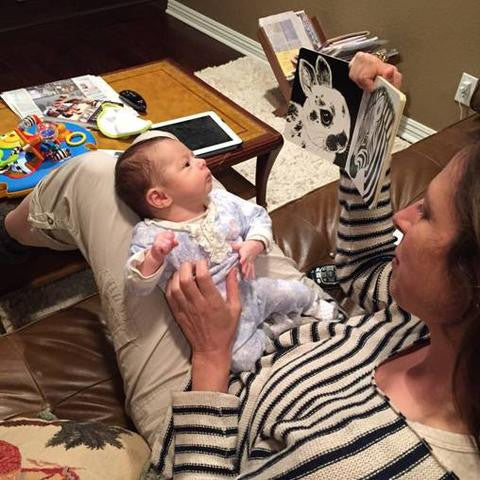
In my twenty-two years with Charlesbridge, I have been fortunate to have authored and/or illustrated twenty-three books. Perhaps the most gratifying have been my baby board books. What a thrill it has been to know that infants as young as two weeks old are introduced to an interactive experience with their parents through my illustrations and simple words.


Painting A New School Year for Charlesbridge

Illustrator Mika Song discusses creating the illustrations for her new book A New School Year: Stories in Six Voices.

When I first read Sally Derby’s poems in A New School Year I was struck by how familiar each character felt to me. My goal for the illustrations was to keep them simple and show the emotions in the poems.


A Tomorrow for Vivian

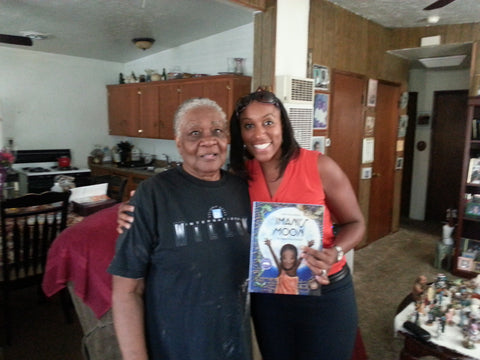
Author JaNay Brown-Wood, author of Grandma's Tiny House: A Counting Story, discusses adding her own shades of color to children’s literature and breaking down stereotypical walls.

I have always been a storyteller at heart. When I was younger, I’d make up stories using my Barbie dolls and teddy bears as the main characters. When I learned to write, I’d capture stories on paper. And when I learned to type, there was no stopping my fingers from creating a world on my computer screen. I write because I love to create and because I enjoy pushing the possibilities of my own creativity.


The Science of Writing and Illustrating a Biography for Children

Author and illustrator Mary Ann Fraser breaks down her scientific process for creating an educational biography for young readers. 

Recently I was asked to speak at a STEMposium about the creation of my latest book, Alexander Graham Bell Answers the Call. The book chronicles Alexander (Aleck) Bell’s childhood. I’m not an educator, but while preparing for my talk, I looked at the current science standards for elementary education and made a remarkable discovery — the process I use as an author and illustrator of children’s books is much like the method employed by scientists. Using Alexander Graham Bell Answers the Call as an example, the steps typically break down something like this:

1. First, much like a scientist, I posed a question. In the case of the Bell book, I asked, “How did Alexander Graham Bell grow up to become the inventor of the telephone?”


Thursday, August 27, 2015

School Visits (and the Genius Ideas I Learn from Them!) by Suzanne Slade

Every school visit I always learn something interesting from teachers and students. My last author visit was no exception because I discovered a genius idea called Genius Hour. During my presentation I’d shared the proof pages of my upcoming picture book, The Inventor’s Secret. Later, one teacher came up and said The Inventor’s Secret would be perfect to kick off her Genius Hour program.
I was excited to see her so enthused about a book I’d worked on for four years, yet I was a bit embarrassed to admit I’d never heard of Genius Hour. So she kindly explained—Genius Hour is a program where students work on a project of their choosing for one hour each week. The great part about this student-driven program is that children are highly motivated to learn about their topics.
Genius Hour lends to a wide variety of projects in one classroom, as each student selects the subject he or she wants to research. For example, at the school I was visiting—Meadowview School in Woodridge, IL—fifth graders in Ms. Wright’s Genius Hour program baked up cotton candy cookies, built battery-powered cars out of spare parts, and much more!

Meadowview students building a battery-powered car from leftover parts from science kits and spare toy parts.

Wednesday, July 8, 2015

Ah, the memories. ALA Annual 2015 in San Francisco. The authors! The illustrators! The librarians!
What a great event!


Friday, May 29, 2015

David's Drawing Table episode 2

Did you ever want to be a storyteller? You probably already are! Join author/illustrator David Hyde Costello at the Drawing Table and help him figure out what to do about one scary lake monster. Is he friend or is he foe? Your ideas are needed!


Tuesday, March 3, 2015

Eating Your Homework is as Easy as Pi!


Humdrum or delicious? When students eat their homework, the classroom suddenly turns from tedious to oh-so-tasty. Get ready to serve up some yummy new fun—while discovering and learning about math and science.


Tuesday, February 10, 2015

Introducing a Children's Book to Scholars?


At first, I was elated when the Hunan Provincial Museum invited me to their International Symposium Commemorating the 40th Anniversary of the Excavation of the Han Tombs at Mawangdui. Elated to be surrounded by experts and scholars from Asia, Europe, and North America who research myriad aspects of Mawangdui. To meet people whose work I had studied in preparing my book, At Home in Her Tomb. To return to Changsha, where Lady Dai and her family had lived and were buried in their lavish tombs.

But then reality and intimidation set in. Like the other symposium participants, I was expected to make a presentation. Oh no. This was the audience I worried about while writing the book because they would know if I had made any mistakes. And now, what could I say about writing a children's book that would possibly be of interest to scholars? Could the book interest them as a research project on introducing Mawangdui to students and nonspecialists—people who haven't heard about the tombs and don't know how important they are?


Wednesday, January 14, 2015

The Words That Connect Us


Jennifer Wolf Kam
Words have always been my friend. From the earliest days of my childhood, when I was delighted by tales of fairies, princesses and pokey puppies, through my grade school years when I crafted my very own books out of construction paper and crayon, they have been there. In middle school, the words I penned were filled with emotion and wonder, and they sustained me through the harrowing teen years. 

I wrote my first novel inside my 8th grade wood shop notebook. On the first page of my notebook, you can still see where I took notes on how to use a T-square ruler. After that, my words—pages and pages of themhave nothing to do with 8th grade wood shop (belated apologies to Mr. Kennedy.) The novel I wrote in it, well, it was a little too similar to a book I’d just read. But it was a start, a leap actually, because for the first time ever, I’d written something longer than five pages. Remarkably, it had a beginning, a middle and an end that actually (sort of) made sense.