Friday, November 17, 2017

The Joys of Research

Terry Lynn Johnson, author of Falcon Wild, discusses the best part of writing a new book: researching.

There are a lot of great things about being an author – fan mail, seeing your book cover for the first time, school visits, taking a selfie in a bookstore while madly pointing at your own name on a shelf – all amazing rewards after years of effort poured into a book. But a surprising perk, one that I hadn’t considered a good thing before, was the research you get to do.

The idea for Falcon Wild had been percolating inside me since I was twelve and read Hawkmistress by Marion Zimmer Bradley. I was obsessed with the idea of owning a bird of prey – something wild and free that comes back to your outstretched fist. What a feeling that would be! I was going to be a falconer! I spent months trying to convince my parents that it would be incredibly cool if we owned a falcon or two. For my efforts, I got a hamster. I named him Snickers and was content with that for a few years.

Fast-forward a couple of decades. I was still fascinated with the idea of forming a special bond with an animal. Instead of a bird of prey, I ended up with eighteen sled dogs. So when I wrote my first book about dogsledding, I needed very little research to portray that relationship accurately. But I’d never forgotten that first obsession with the art of falconry.


Writing Science Books for Babies in 3 (not so) Simple Steps

We asked author Ruth Spiro the not-so-simple question: What inspired you to write STEM books for babies?

Since the first two titles in the Baby Loves Science series came out in October 2016, this is the question I’m asked most often. Fortunately, it’s also the easiest to answer!

Back in 2010 The New York Times ran the article "Picture Books No Longer a Staple for Children." It attributed the drop in picture book sales to the choice some parents were making to bypass picture books for their very young children in favor of more “sophisticated” reading material. I was discussing the article with friends and wondered aloud, “What do these parents want, quantum physics for babies?”


Board Books – A Head-start for Babies

Author-illustrator Phyllis Limbacher Tildes reminisces on her motivation for creating board books for babies and her own personal connection to educational reading.

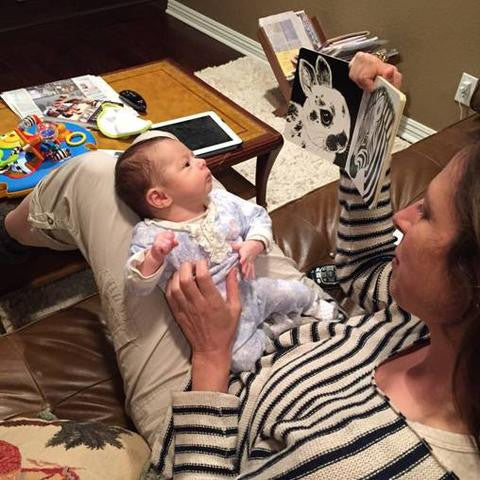
In my twenty-two years with Charlesbridge, I have been fortunate to have authored and/or illustrated twenty-three books. Perhaps the most gratifying have been my baby board books. What a thrill it has been to know that infants as young as two weeks old are introduced to an interactive experience with their parents through my illustrations and simple words.


Painting A New School Year for Charlesbridge

Illustrator Mika Song discusses creating the illustrations for her new book A New School Year: Stories in Six Voices.

When I first read Sally Derby’s poems in A New School Year I was struck by how familiar each character felt to me. My goal for the illustrations was to keep them simple and show the emotions in the poems.


A Tomorrow for Vivian

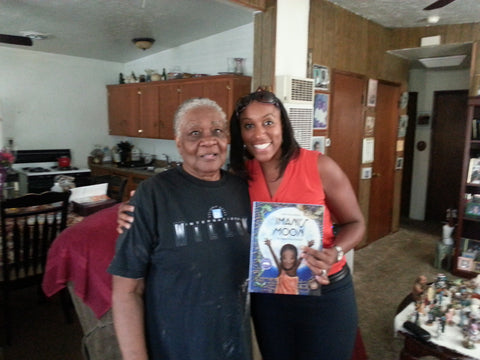
Author JaNay Brown-Wood, author of Grandma's Tiny House: A Counting Story, discusses adding her own shades of color to children’s literature and breaking down stereotypical walls.

I have always been a storyteller at heart. When I was younger, I’d make up stories using my Barbie dolls and teddy bears as the main characters. When I learned to write, I’d capture stories on paper. And when I learned to type, there was no stopping my fingers from creating a world on my computer screen. I write because I love to create and because I enjoy pushing the possibilities of my own creativity.


The Science of Writing and Illustrating a Biography for Children

Author and illustrator Mary Ann Fraser breaks down her scientific process for creating an educational biography for young readers. 

Recently I was asked to speak at a STEMposium about the creation of my latest book, Alexander Graham Bell Answers the Call. The book chronicles Alexander (Aleck) Bell’s childhood. I’m not an educator, but while preparing for my talk, I looked at the current science standards for elementary education and made a remarkable discovery — the process I use as an author and illustrator of children’s books is much like the method employed by scientists. Using Alexander Graham Bell Answers the Call as an example, the steps typically break down something like this:

1. First, much like a scientist, I posed a question. In the case of the Bell book, I asked, “How did Alexander Graham Bell grow up to become the inventor of the telephone?”


Thursday, August 27, 2015

School Visits (and the Genius Ideas I Learn from Them!) by Suzanne Slade

Every school visit I always learn something interesting from teachers and students. My last author visit was no exception because I discovered a genius idea called Genius Hour. During my presentation I’d shared the proof pages of my upcoming picture book, The Inventor’s Secret. Later, one teacher came up and said The Inventor’s Secret would be perfect to kick off her Genius Hour program.
I was excited to see her so enthused about a book I’d worked on for four years, yet I was a bit embarrassed to admit I’d never heard of Genius Hour. So she kindly explained—Genius Hour is a program where students work on a project of their choosing for one hour each week. The great part about this student-driven program is that children are highly motivated to learn about their topics.
Genius Hour lends to a wide variety of projects in one classroom, as each student selects the subject he or she wants to research. For example, at the school I was visiting—Meadowview School in Woodridge, IL—fifth graders in Ms. Wright’s Genius Hour program baked up cotton candy cookies, built battery-powered cars out of spare parts, and much more!

Meadowview students building a battery-powered car from leftover parts from science kits and spare toy parts.

Wednesday, July 8, 2015

Ah, the memories. ALA Annual 2015 in San Francisco. The authors! The illustrators! The librarians!
What a great event!


Friday, May 29, 2015

David's Drawing Table episode 2

Did you ever want to be a storyteller? You probably already are! Join author/illustrator David Hyde Costello at the Drawing Table and help him figure out what to do about one scary lake monster. Is he friend or is he foe? Your ideas are needed!


Tuesday, March 3, 2015

Eating Your Homework is as Easy as Pi!


Humdrum or delicious? When students eat their homework, the classroom suddenly turns from tedious to oh-so-tasty. Get ready to serve up some yummy new fun—while discovering and learning about math and science.