Friday, May 16, 2014

FEATHERS: A Book That Has Really Taken Flight


A Junior Library Guild Selection

Feathers: Not Just for Flying by Melissa Stewart and illustrated by Sarah S. Brannen was released on February 25, 2014 and it has really taken off! Critics, teachers, librarians, readers of all ages, but especially love this book. Who knew feathers had so many uses?

Feathers received rave reviews, including a starred review from Publishers Weekly, and the first printing quickly sold out. The perfect summer reading for curious kids, the scrapbook-style format begs for a young readers to take this book outside and used as a guide for observing birds.

"A focused and thorough examination that highlights the striking beauty of these often-unnoticed natural objects." 
                              -Publishers Weekly, starred review

"The combination of thoughtful approach and careful crafting makes this an excellent resource for early nature study."
                             -Kirkus Reviews
 
"Beautiful and concise, this is an excellent resource for units on animal adaptation, and a treat for the youngest bird lovers."
                          -The Bulletin of the Center for Children's Books
 
"Part science journal, part read-along nonfiction, Feathers succeeds in what such science books for young readers should strive to do: help young minds spot the extraordinary in the seemingly mundane."
                          -Booklist

 More about Feathers: Not Just for Flying from author Melissa Stewart


While I was doing research for another book, I stumbled across a fascinating article in Birder's World (now BirdWatching magazine). It described some of the amazing ways birds use their feathers. I knew this would be a great topic for a children's book, so I photocopied the article adn pinned it to the idea board in my office. 

A few months later I dug into the research. As I do for all my books, I turned to three main sources for information: the library (for books, magazines, and newspapers), the Internet (for journal articles and locating experts in the field), and my own nature journals. Some examples in this book are based on my personal observations in the natural world. Others come from interviews with scientists as well as reports in scholarly books and scientific journals. 

For me, research is the easy part of a project. The hard part is figuring out the most interesting way to frame the material. I'm always asking myself, "Is there a way I can make this even more engaging?" For this book, I spent three years tinkering with the text. I wrote countless drafts and did four complete overhauls before I finally latched on to the idea of comparing feathers to common objects in our lives. That's when the writing came to life, and I knew the manuscript was ready for my editor. 

From the author's note in Feathers: Not Just for Flying


A note about collecting in nature: Gathering and keeping feathers from native wild birds is prohibited. In some cases you may collect feathers after obtaining a specific permit or license. Please be mindful of the laws that protect birds and their environment.

Visit author Melissa Stewart online.
Visit illustrator Sarah S. Brannen online.

Thursday, May 1, 2014

The Very Tiny Baby: A Story I Needed to Write

FROM SEED TO BOOK
 
LIFE EVENTS

1989: My first baby, Flora, was born very premature and died shortly after birth. Very sad story. 

1992: My second baby, Sam, was born very premature, stayed 3 months at the hospital, came home, and is now a junior in college. Happy story.

Sam, November 1992
Sam, July 2013
HAPPY STORY? WAIT! IS THERE A BOOK IDEA HERE? 

Ideas are easy to come by! Developing them into interesting story lines, with engaging characters and a satisfying ending, that’s hard work.

From the day Sam came home as a very tiny baby, I wanted to write a story using the experience of her prematurity.

What would the story line be? Who would be the main character? What would be the problem to solve? I had no idea.

What followed was years of mothering whirlwind. Illustrating projects were done between diaper changes, school lunches, and play-dates. Very little thinking time was spent on the Idea. Still, the mind has its own way of working things out.

Both mothering AND illustrating allowed for endless enjoyment of children’s books. And two main points were emerging very strongly: 

1) I was enjoying stories told in the first person very much.
2) I was becoming enamored of children’s drawings and trying to incorporate that into my work. 

DING! The story of the premature baby? I would write it--in first person--through the eyes of an older sibling. Jacob!

DING! I would draw it in a child-like manner as if Jacob was recording his experience. 

DING! I would do it in a journal/scrap-book format.

A STORY! 

2008: Sam was 10 and I could enjoy longer stretches of working time.

In keeping with the scrap-book notion, I surrounded myself with scraps of paper and filled them with all the thoughts that could come up in Jacob’s mind.

The thoughts then got organized and reorganized till they formed a coherent story-line fit for a 32 page book. Some had only a few words on them, some had doodles. Some seemed more important, some disposable.
Sample spread from the first draft
Something unusual happened to me while I worked. I felt very emotional. The work was pouring out of me. I would hardly take any breaks. It was as if I had pierced a hole in an emotion balloon inside my head.

And suddenly it all made sense:

1) I was not drawing on my experience as the mother of a premature child. I was drawing on my experience as the older sibling of a very premature baby brother.
2) I was writing for myself.

I have no actual memory of when I was that young, but the family story goes like this:

When I was 2 ½ my brother, Albert, was born very premature. He spent some time at the hospital where he failed to thrive. Then he was sent home “to die.” Because of the terror of germs, my mother closeted herself with my brother in an empty white room and nursed him to life. The story usually concentrates on what my mother went through--her fears, her exhaustion, her responsibility.

What about "little me"? That was not part of the story. I’m sure I was kept clean, fed, and safe. But what was I told? Was I told anything, even? How did my world change? How much was I asked to do by myself now that I was a “big girl"?

In those days, children were asked to be “nice." I was very, very “nice.” I still am. Was I trying to please in order to win back my parents’ love?
Me and my little brother, Albert.
What I now understand: through Jacob, I was talking to "little me." I cried and allowed myself to be “not nice," to have “mean thoughts.” It felt good. Cathartic.

A PUBLISHER 

2010: After many rejections, the book dummy found a publisher: Charlesbridge. Both my editor, Emily Mitchell, and my art director, Susan Sherman, understood what I was after and supported my vision, even when marketing expressed misgivings. They helped me reshuffle, simplify, refine, and rewrite what was then The Baby Who Came Too Soon and is now TheVery Tiny Baby.
Another stage of the same spread...

...and another!
And the final version!  
The book came out in 2014, 21 years after Sam's birth! Some seeds lay dormant for a long time.

MY HOPE FOR THIS BOOK: 

Because of theme of prematurity, The Very Tiny Baby will be considered a “niche” book and will be shelved accordingly. I understand.

In my mind, however, the main subject of the book is Emotional Upheaval. And that is a universal subject--whether the expected baby is premature or not, whether there is an expected baby or not.

My wish for this book is for it to be read to or by many children and to help some of them deal with their personal emotions, to recognize them, to realize other children feel them too, and to accept them.

NOTE ON THE SCRAP-BOOK STYLE:

Although I described the style of The Very Tiny Baby as similar to that of a scrap-book or journal, it is a story told in sequential panels and is very much a graphic novel (0r comic). The world of comics is exploding in exciting ways. It includes an enormous variety of stories and styles. I am passionate about it and am so pleased to have my own contribution in the form of The Very Tiny Baby. 

WHAT NEXT?

I am now putting the finishing touches on Zig and the Magic Umbrella, a story for Dial Books for Young Readers, done in panel format and in collage paintings. (A little blue monster, a little yellow bird, adventure, trials, friendship.)

MY WEB-COMICS
Detail from a page of Suzette Totvitz.
Combining my love of comics and my experience with difficult pregnancies, I am now posting a web comics--for adults. It is a work in progress. My goal is to create 3 to 5 new “pages” a week. You can follow Suzette Totovitz on my comics blog, www.sylviekomix.blogspot.com, or on my tumblr

You can also follow me on facebook or check my children's book blog for news and book updates.


****
Posted by Sylvie Kantorovitz, author and illustrator of The Very Tiny Baby.

Monday, March 31, 2014

In Honor of Family


Photograph by David Schlatter

My first book, At Home in Her Tomb: Lady Dai and the Ancient Chinese Treasures of Mawangdui, describes a woman and her elaborate tomb─the memorial created by a grieving family. Writing this book was not only a fascinating intellectual endeavor for me, but also a personal journey of connection to my extended family and our ancestors.

After growing up in China, my parents immigrated to America in 1946. My brothers and I were born in the Northeast, and then we moved to the Midwest when I was three years old. So I grew up far from the land of my heritage. 

But every summer we drove from Kansas City to Toronto for reunions with our extended family. (My father's parents and siblings had also immigrated to the USA or to Canada.) There I was aware of belonging to a large family, a long history, and a complex culture beyond my everyday life. I was surrounded by my grandparents, uncles, and aunts chatting in Cantonese while I played with my cousins. I was introduced to dimsum—small plates of juicy dumplings, steamed buns, and other mouthwatering treats—plucked from carts rolling between a restaurant's giant round tables. I remember my grandfather giving me candy from a secret cache high on his closet shelf, but I also sensed that the entire family treated him as the most honored member.

When I was a mother with two young children, my own mother died. My parents always being there had been my secure foundation, but that shifted with her death, leaving a hole of grief and vulnerability in my life.

In November 1999, I traveled with my father to Taiwan and China. Serendipitously I stumbled upon a special exhibit of Han dynasty artifacts at the National Palace Museum in Taipei. This was the first time I had ever heard of the three tombs of Mawangdui, but I was immediately hooked on learning more about them. Who were the mother, father, and son buried in the tombs? Why would their family bury them with so many treasures, including personal items like the mother's cosmetics case, the father's signature seals, and the son's zither? 

The next week, we journeyed to the southern Chinese village where my father's family has lived since the late 1500's. Along with two dozen relatives living in or near the village, we visited the cemetery where four generations of our ancestors are buried. In front of their niches, we lit candles and incense, offered food and drink, and burned mock money and paper clothes—modern versions of rituals performed for thousands of years. I was struck by the realization of being connected to these people whom I'd never met, yet were literally part of me.

After lighting candles and incense, we set out food and drink in front of our ancestor's niches.


Three years later in June 2002, my father took me, my brothers, and our families to visit his homeland. We entered the Forbidden City, inspected the First Emperor's terracotta troops, sailed down the Yangzi River, and saw where my parents had lived and been schooled.  

I took a side trip to Changsha to see the Mawangdui tomb site and the many artifacts in the Hunan Provincial Museum. By then, I had studied enough about Mawangdui to be completely agog at seeing the silk-draped body of Lady Dai and the cavernous tomb of her son.

The following day twenty-one of us from America and ten of us from China met at the same cemetery I had visited before. My daughters, nieces, and nephews participated for their first time in the traditional rituals of lighting candles and incense, offering food and drink, and burning mock money and paper clothes. I marveled at the continuity of life that bound us together across centuries and continents: four generations of living descendants paying our respects to four generations of ancestors. As I watched the smoke from the burning paper rise into the sky, I saw an image in my mind of an endless queue of our ancestors winding across the cemetery.

It is believed that burning mock money and other paper goods sends them to the ancestors. 

 
Through seeing artifacts from the Mawangdui tombs and performing rituals at my ancestors' graves, I could imagine the family of Lady Dai expressing their love and respect in creating an elaborate tomb for her. I could identify with her family through my experiences of missing my own mother and of honoring my ancestors. And through learning about Lady Dai and her world, I understand more of the history and meaning behind the rituals my family performs to commemorate our loved ones.

*****

Posted by Christine Liu-Perkins, author of At Home in Her Tomb, which releases on April 8, 2014. Find out more about her at www.christineliuperkins.com.

Monday, March 17, 2014

"When I'm Good, I'm Very Good. But When I'm Bad I'm Better."

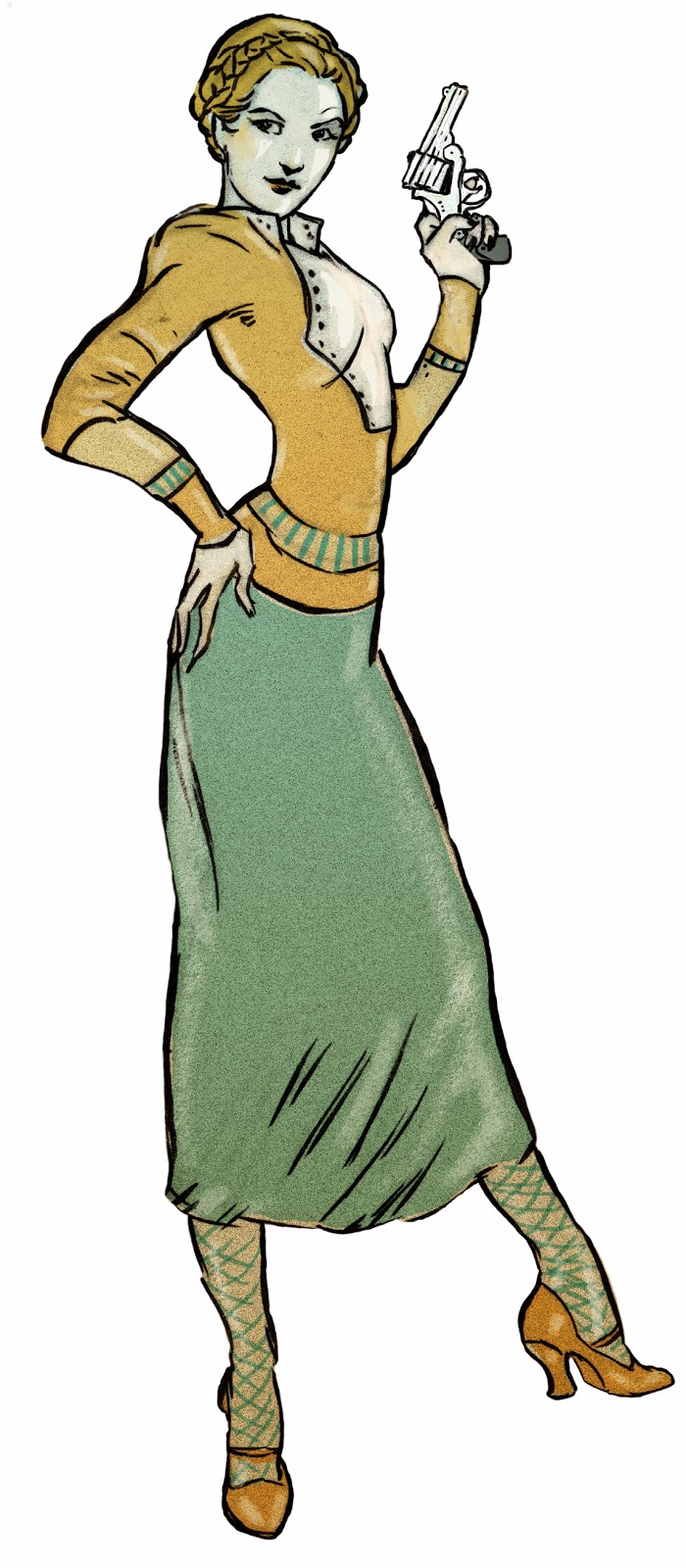
 Mae West spoke those provocative lines in the movie I'm No Angel, and women have been identifying with it ever since. But women were bad a lot further back than that 1933 movie. Find twenty-six of the world's most notorious females in Bad Girls: Sirens, Jezebels, Murderesses, Thieves, & Other Female Villains by Jane Yolen and Heidi E. Y. Stemple, with illustrations by Rebecca Guay.

Modern Times and Changing Gender Roles


If Salome dropped her veils today, would we call her bad? Or would we arrest her parents for a variety of crimes against a child? If Mata Hari made up a whole new self tomorrow and danced her way into a criminal lifestyle, would we execute her or send her to counseling for post-traumatic stress disorder? Would we encourage Lizzie Borden to move into her own apartment, Bloody Mary to establish an ecumenical council, and Typhoid Mary to take some nursing courses at a community college? Would we still consider these women bad? Or would we consider them victims of bad circumstances? As our world changes, so does our definition of bad. Especially when it comes to half the world's population--the half that happens to be female.

With women's relatively new rights--to speak out, to vote, to have power over their own bodies--comes a new set of responsibilities. Women are no longer required to do a man's bidding--no matter whether that bidding is legal or not. But no longer can a woman say that she was just followign a man and count that as justification for bad acts.

We measure guilt and innocence today on a sliding scale. And never has it been easier for the general public to "weigh" the misdeeds of its favorite modern-day bad girls. The nightly news, tabloids, blogs, and the fast pace of the Internet all make sure of this. Today, as throughout history, the court of public opinion is capable of swaying or tempering the criminal courts.

Now that you have been introduced to some of history's bad girls, you will have to decide for yourself if they were really bad, not so bad, or somewhere in the middle. And perhaps you will see that even the baddest of bad girls may have had a good reason for what she did.

from the Conclusion of Bad Girls

March is Women's History Month!

Wednesday, March 5, 2014

Sloth Bears and Sun Bears and Grizzlies, Oh My!


I didn’t know it at the time but the seed for Wild About Bears was planted in my mind twelve years ago when my husband, three children, and I traveled by car from Maine to Montana. 

Friends, guides, and park rangers had all told us that the chance of a bear encounter would be next to nil. Boy, were they wrong. Minutes after passing through the gate into Glacier National Park we spotted two black bears close to the road. Later that afternoon, after hiking a well-traveled path, we spied two grizzlies meandering down that very same trail. We started to call ourselves bear magnets!

Grizzly & Discovery Center, West Yellowstone

Later that week, after seven hours in the saddle on the first day of a pack trip, we found ourselves deep in the Lee Metcalf Wilderness, camping beside a beautiful mountain meadow and a clear cold stream. That afternoon my husband, blissfully fly-fishing downstream, looked up to see a large bear standing up and staring at him from thirty feet away on the opposite bank. Defying the rule “Never run from a bear,” he turned tail and sprinted, yelling and gasping for breath. At an altitude of 8,000 feet, needless to say he did not get very far. Luckily the bear did not follow . . . or so we thought.

Within the hour I spied the same bear in our camp curiously peering at us from behind a tree, almost as though he were playing hide and seek. He was much too close for comfort. Our guide and wranglers had to run him off two different times before he was gone for good.

That night our family of five settled uncomfortably in our tent. My husband, a shovel by his side as his weapon of choice, didn't sleep a wink.

The seed thus had been sown, along with great memories and a love, fascination, and respect for bears. Wild About Bears is the result.

Original artwork from Wild About Bears


Years later, my husband and I built a small home in Montana, just an hour from Yellowstone National Park. I am always on the lookout for bears. My husband prefers to watch from the car. 

Wild About Bears will be published on March 11, 2014, and I am jumping for joy at the prospect of visiting schools to share the many bear facts I have been collecting for several years. Kids will marvel at the uniqueness of each of the eight bear species as well as the commonalities they share.

I am currently working on the illustrations for The Decorated Horse, written by Dorothy Hinshaw Patent (forthcoming from Charlesbridge).


------
Posted by Jeannie Brett, author and illustrator of Wild About Bears. Visit Jeannie's wesbite at www.jeanniebrett.com, "like" her on facebook, and follow her on twitter, @jeanniebrett. Be sure to check out the Wild About Bears facebook page too!

Friday, February 21, 2014

A Brief History of Michelangelo's David

Author Jane Sutcliffe
A month after Michelangelo's David was unveiled in September 1504, more work was ordered. David's sling and the tree stump behind his leg were covered in gold. Some experts say David himself wore a crown of gold leaves. And he was given a belt of copper leaves to cover his nakedness.

The people of Florence hoped that their David would always bring the city luck. But as it turned out, he wasn't in the luckiest of spots.

Once lightning struck the statue and damaged the base.

Another time someone threw a bench out of a window just above David's head. The bench hit David's left arm and smashed it into three pieces. A friend of Michelangelo's rescued the pieces. Later the statue was repared.

Then the giant faced a different kind of danger. Year after year of standing in the city square meant year after year of hot summers and cold winters. It meant year after year of rain and wind and dirt. And bird droppings

After a few centuries someone noticed that the statue was looking pretty dirty. Worse, the marble was pitted and damaged. David was being worn away. 

There was only one thing to do. The statue was cleaned and moved inside for safekeeping. Of course the people of Florence could not think of a city square without David. So a copy was made to stand in the same place.

Now David has been standing for more than five hundred years. He is safe and protected. The adornments are gone. People who come to see David today see him much as he must have looked when he left Michelangelo's hands.

From the Author's Note in Stone Giant: 
Michelangelo's David and How He Came to Be

Monday, February 3, 2014

Interview with an Illustrator

February is Black History Month and we have a new and inspiring book to help you celebrate. Under the Freedom Tree by Susan VanHecke, illustrated by London Ladd, tells the little-known story of the first contraband camp of the American Civil War.  

One night in 1861, three escaped slaves made their way from the Confederate line to a Union-held fort where they were declared “contraband of war” and granted protection. As word spread, thousands of runaway slaves poured into the fort. These “contrabands” made a home for themselves, building the first African-American community in the country. In 1863 they bore witness to one of the first readings of the Emancipation Proclamation—beneath the sheltering branches of the tree now known as Emancipation Oak. 

London took a moment to speak with Unabridged about what it was like to illustrate this important picture book.


What was it about the manuscript for Under the Freedom Tree that made you want to illustrate the book?
This was a fascinating part of not only African American history, but American history that I had no idea existed. The actions of three men led to the first African American contraband camp and eventually their own self-sustaining free community. Here during the era of slavery, African Americans could learn to read and write and build their community.

How challenging (or easy!) was it to illustrate the story of Frank Baker, James Townsend, and Shepard Mallory?
The most challenging aspect was when I gathered all the research. As I dug deeper I would find more details that would catch my interest. I had to force myself to focus on the information needed rather than get lost in the vast amount of information available.

The easy part of this project was going to visit the actual location of the events. Visiting Fort Monroe and standing where the three men launched at Sewell's Point and standing next to the Emancipation Oak was a moving experience.


Most authors and illustrators don't get the chance to work closely with each other--oftentimes, they never even meet! Yet you and Susan worked very closely to create Under the Freedom Tree. What was the process like? Have you had similar experiences with other authors in the past?
This is the first time I have actually worked with the author of the book I illustrated. It was very nice to connect with Susan because we shared similar visions for the book. She lives in Virginia, right near the Emancipation Oak, and therefore was able to show me some of the sites that I went to visit and had great insight.

What kinds of stories are you drawn to as an illustrator?
Most importantly a story has to speak to my heart. I'm drawn to stories of perseverance, survival, and overcoming obstacles. I think it's fascinating to illustrate stories that show the strength of the human spirit.

Are you influenced or inspired by the work of other children's book illustrators? If so, who and why?
The answer to this is a big fat YES! I have so many illustrators that I love and constantly refer to when I need a creative push. I'm a big fan of classics like NC Wyeth, Dean Cornwell, Jessie Wilcox Smith, and John Lagotta, but there are current illustrators that I just marvel at and study intensely: Greg Manchess because of his color palette, how he applies his paint, his brush stroke technique, and the way he captures subject matter whether it's something still and quiet or action-packed; James Gurney because the guy is the epitome of an illustrator--extremely knowledgeable, amazingly creative, constantly working on his craft, and eagerly sharing his knowledge with anyone who asks; Chris Van Allsburg is a master storyteller with his expressive characters and beautifully designed books. I also admire other phenomenal modern age illustrators like Kadir Nelson, Brian Collier, Jerry Pinkney, David Shannon, Gary Kelley...just to name a few.